Filmmaking shot techniques: Guide to film formats
"They were 21 inches apart to cover the 20 feet taken by the horse's stride, taking pictures at one-thousandth of a second."
Filmmaking shot techniques bridge the gap between capturing a single moment and creating a living, breathing narrative. This guide explores how camera mechanics, film formats, and digital sensors shape visual storytelling.
We will look at the evolution from celluloid to digital, the physics of depth of field, and how specific technical choices impact the final image.
How do traditional film formats shape the image?
A technician holds a 35 mm film strip, noting the delicate emulsion coated onto the transparent celluloid. This specific width was once the industry standard for capturing motion.
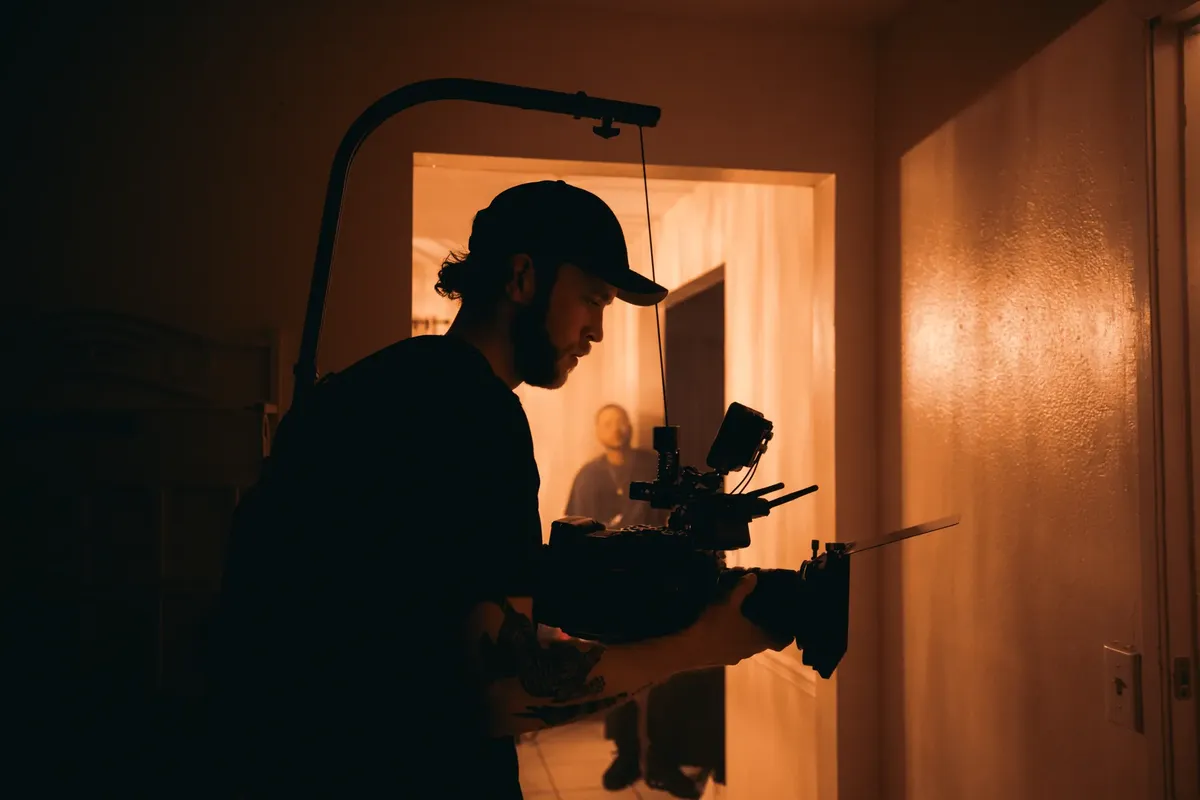
Historically, cameras used a series of instantaneous photographs on standard Eastman Kodak photographic emulsion coated onto a transparent celluloid strip 35 mm wide. This process allowed for the capture of motion through sequential frames.
Different formats like Super 8 mm, Super 16 mm, and Super 35 mm were developed to utilize more of the overall film area for the image than their "regular" non-super counterparts. These variations allowed cinematographers to choose specific visual scales.
The shift toward larger formats changed how audiences experienced cinema. IMAX and other 70mm formats gained popularity to provide a more immersive experience. These formats offered distinct visual characteristics compared to standard 35 mm.
The physical dimensions of the film gate and the aspect ratio of the negative determine the frame's composition and the amount of visual information available for cropping.
How does sensor size affect depth of field?
A cinematographer adjusts a lens, trying to balance the sharpness of a subject against a blurred background. The physics of the sensor or film plane dictates this visual depth.
The relationship between film size and depth of field is a fundamental aspect of movie camera techniques. Therefore, 70mm has less depth of field than 35mm for a given field of view, while 16mm has more depth of field than 35mm.
Early video cameras, as well as most modern consumer-level video cameras, provide even more depth of field than 16mm. This means subjects appear sharper against the background in smaller formats.
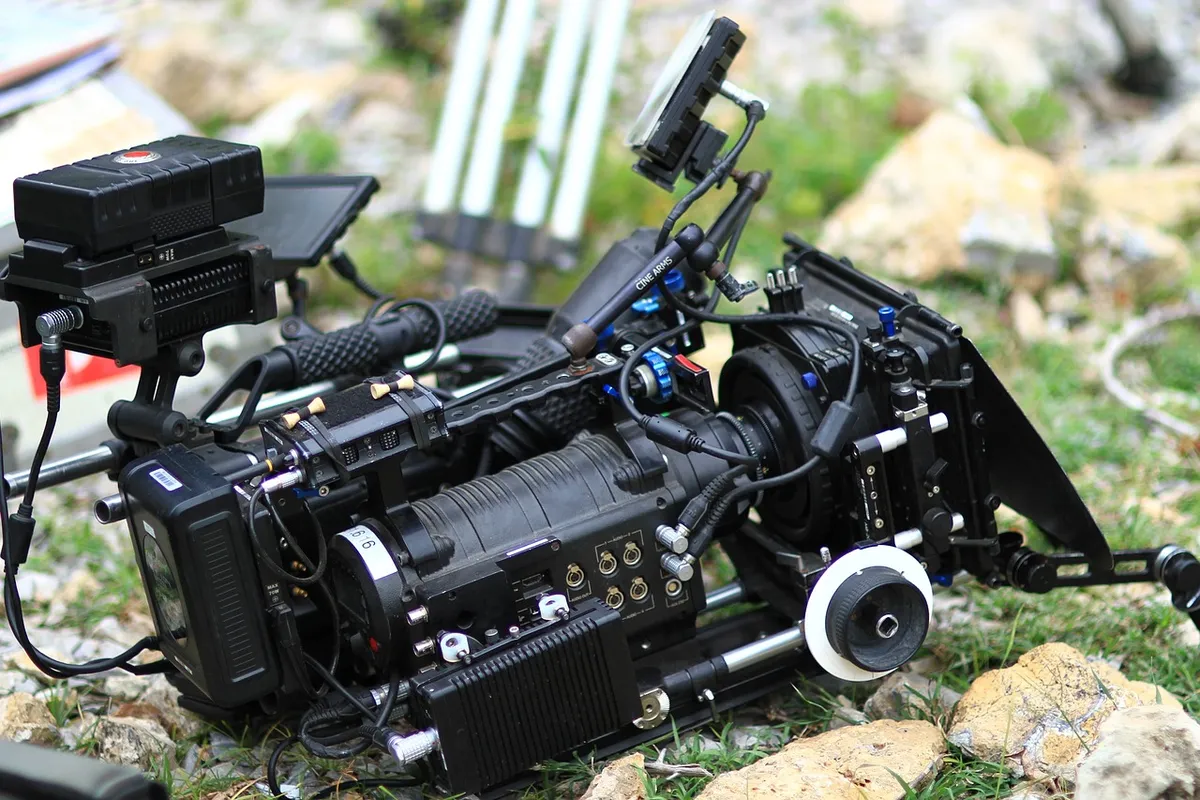
Understanding these physics is vital for film shooting methods. For example, Digital SLR still cameras have sensor sizes similar to that of the 35mm film frame, and thus are able to produce images with similar depth of field. This similarity allows photographers to emulate traditional looks.
Larger sensors typically require longer focal length lenses to achieve the same field of view as smaller sensors, which results in a shallower depth of field.
How did the transition to digital change cinematography roles?
A projectionist switches from a heavy film reel to a sleek digital drive. The industry has moved from physical strips to data-driven light.
The shift from physical film to digital data redefined cinematography roles. In late 2013, Paramount became the first major studio to distribute movies to theaters in digital format, eliminating 35mm film entirely.
Since then, the demand for movies to be developed onto digital format rather than 35mm has increased significantly. This transition changed how footage is captured, stored, and distributed globally.
Early in the transition to digital cinematography, the inability of digital video cameras to easily achieve shallow depth of field, due to their small image sensors, was initially an issue of frustration for filmmakers trying to emulate the look of 35mm film.
This technical hurdle required new approaches to lighting and lens selection.
The shift to digital workflows integrated data management into the production process, requiring cinematographers to balance traditional lighting techniques with technical metadata oversight.
How do modern cameras emulate the film look?
A director looks at a monitor, checking if the digital sensor captures the warmth of vintage celluloid. Modern technology seeks to bridge the gap between pixels and grain.
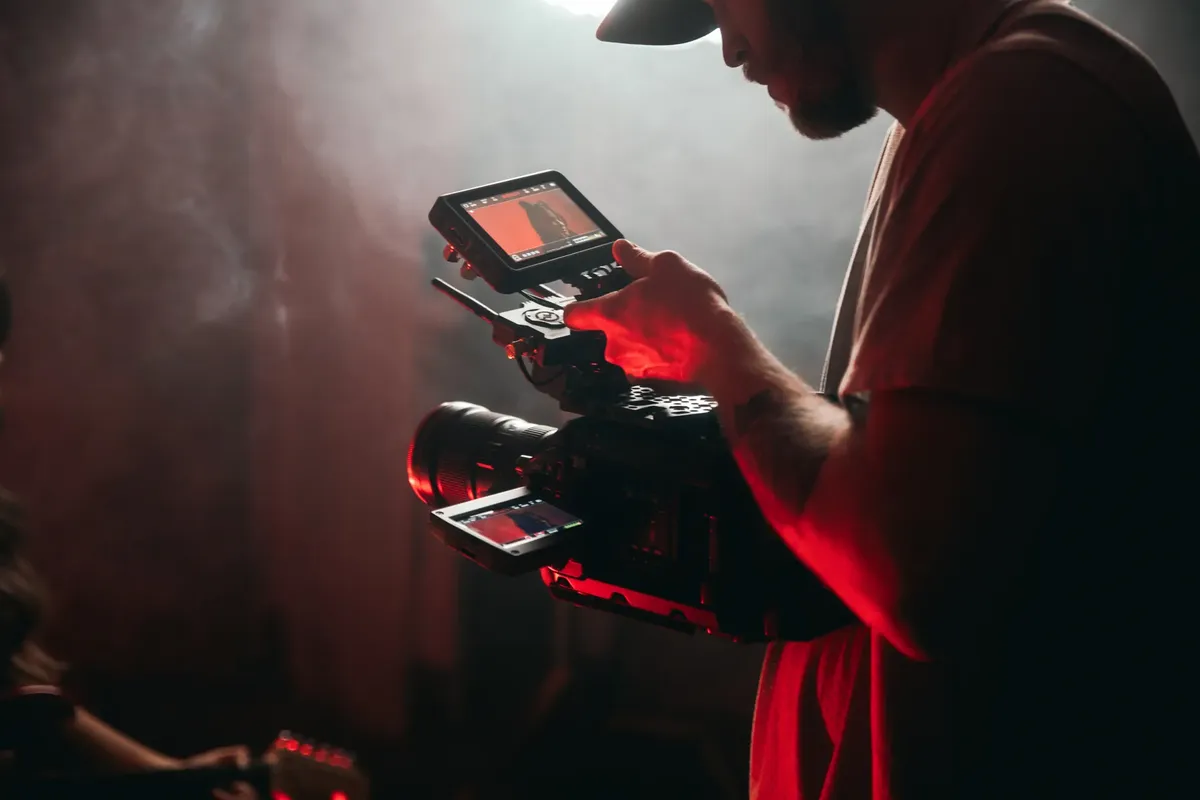
Modern movie tech in film often involves mimicking the organic qualities of traditional film. More recently, more and more dedicated video cameras are being equipped with larger sensors capable of 35mm film-like depth of field.
This technological advancement helps bridge the gap between digital clarity and filmic texture.
Digital image adjustments such as ISO and contrast are executed by estimating the same adjustments that would take place if actual film were in use. These adjustments are thus vulnerable to the camera's sensor designers' perceptions of various film stocks and image adjustment parameters.
This means the "look" is often a result of how software interprets light.
Manufacturers achieve a film-like aesthetic by incorporating specialized color science, dynamic range characteristics, and controlled grain structures into their sensor processing.
What are the practical steps for managing motion and time?
A filmmaker sets a timer, preparing to capture a long-duration event through a series of still shots. Manipulating time through frame rates is a core part of visual storytelling.
To manipulate the perception of time through specialized filming, follow these steps:
- Capture a series of still images at specific intervals. 2. Collect the footage to represent a specific duration. 3. Project the captured frames at a standard rate, such as 24 frames per second.
For instance, if a cinematographer sets a camera to expose one frame every minute for four hours, and then that footage is projected at 24 frames per second, a four-hour event will take 10 seconds to present. Conversely, one can present the events of a whole day (24 hours) in just one minute.
I found that understanding these mathematical ratios is essential when planning a shoot.

- Select the appropriate frame rate to establish the intended temporal feel.
- Adjust the shutter angle to control motion blur.
- Match the shutter speed to the chosen frame rate to maintain consistent exposure and movement.
How do different formats compare?
A comparison of formats helps determine the right tool for a specific visual goal. Different sizes offer different levels of immersion and depth.
| Format | Depth of Field Characteristic |
|---|---|
| 70mm | Less depth of field than 35mm |
| 16mm | More depth of field than 35mm |
Choosing a format involves balancing the desire for a shallow depth of field against the need for a wide field of view.
Comparing formats involves evaluating the trade-offs between resolution, dynamic range, low-light sensitivity, and the specific aesthetic qualities unique to each medium.
Related






Comments 0